Utah roofs face challenges that many roofs in other states do not. The combination of high elevation and seasonal extremes creates stress that standard roofing systems may struggle to handle. If your contractor only built your roof to code but didn’t take into account the specific challenges your Utah roof will face, your roof may not provide the protection you expect.
You may notice missing shingles after windstorms, leaks that appear without warning, or ice piling up every winter. These problems often seem isolated, but they typically stem from three common threats: canyon winds, winter freeze-thaw cycles, and ice dams.
Experienced Utah roofing contractors understand how these three roof killers cause damage to your roof. We’ll help you recognize early warning signs, so you can avoid long-term damage.
1. Canyon Winds
The first roof killer is canyon winds. Canyon winds accelerate as they move through mountain passes and narrow valleys. This funneling effect creates sudden, intense gusts that hit homes with little warning. You often feel these winds along the Wasatch Front, foothill neighborhoods, and areas near canyons.
These gusts exploit weak attachment points on the roof. Shingles lift, fasteners loosen, and edges peel back. Remember that looks can be deceiving. Your roof may look fine, but it may be compromised after repeated high winds.
When wind repeatedly tests the same weak spots, damage becomes cumulative. Small losses turn into widespread failures over time.
Why Canyon Winds Cause More Damage Than Typical Storms
Unlike broad storms, canyon winds strike unevenly. One side of your roof may take the full force while the other remains untested. This imbalance increases uplift pressure and stresses materials.
Typical roofing systems lack reinforced edges and enhanced fastening. When put to the test by Utah’s canyon winds, they lose shingles more frequently, exposing the roof deck to moisture.
If you find yourself repairing the same areas after every major wind event, you likely have a deeper vulnerability.
2. Utah’s Freeze-Thaw Cycles
The second roof killer occurs when its legendary snow piles up on flat roofs. Flat roofs appear frequently on modern homes, additions, and multi-unit buildings. While they offer clean lines and usable space, they present challenges in Utah’s climate.
Flat roofs rely on precise drainage. When drainage falls short, water pools and adds weight to the structure. Over time, this ponding stresses materials, causes sagging, and leads to leaks that spread beneath the surface.
How Utah Conditions Expose Flat Roof Weaknesses
Utah winters bring freeze-thaw cycles that are especially hard on flat roofs. Water freezes overnight and expands, then melts during the day. This constant movement breaks down seams and membranes.
Heavy snow loads compound the issue. Flat roofs must support weight for more extended periods, increasing structural strain. Poor design or aging materials amplify the risk.
You may not notice interior leaks until long after damage begins, making flat roof issues harder to catch early.
3. Ice Dams That Keep Coming Back
The third roof killer is ice dams. Ice dams form when heat escapes through the roof and melts snow unevenly, causing it to accumulate at the edges of the roof. Water runs down and refreezes near the eaves, creating a dam that traps additional meltwater.
This trapped water pushes back under shingles and into the roof system. Over time, it damages decking, insulation, and ceilings.
Ice dams often return every winter, especially on roofs without sealed decks or proper edge protection.
Why Ice Dams Hit Utah Homes So Hard
Utah’s snow accumulation, combined with temperature swings, creates ideal conditions for ice dams. Cold nights followed by sunny days drive repeated melting and refreezing.
Homes built to minimum code requirements often lack defenses against this cycle. Without extra water barriers, even small ice dams lead to leaks.
You may notice stains, peeling paint, or damp insulation months after winter ends.
Warning Signs You Should Not Ignore
These roof killers leave clues before major failure occurs. Catching them early can prevent extensive repairs. Watch for these signs.
- Missing or lifting shingles after windstorms. This points to attachment issues that Canyon Winds exploits.
- Standing water or sagging in flat roof areas. These indicate drainage problems or structural stress.
- Recurring ice buildup along the eaves. This signals a risk of heat loss and water intrusion.
When these signs appear repeatedly, schedule a roof repair estimate with a trusted roofing company. They can help determine if your roof needs more than basic repairs.
Why Code-Minimum Roofs Struggle in Utah
Building code establishes baseline requirements, not long-term resilience. Many Utah roofs meet code but still fail under local conditions.
Code often does not require sealed roof decks, enhanced fasteners, or reinforced edges. These omissions matter when winds, snow, and ice push roofs beyond average limits.
Homes built without considering Utah’s unique environmental conditions experience more repairs and shorter roof lifespans.
How Stronger Construction Practices Reduce Risk
Some contractors build to minimum standards because they meet inspection requirements. Others lack experience with Utah’s specific challenges.
Roofs built with Utah’s realities in mind perform better. For example, FORTIFIED™ roofing contractors in Utah use FORTIFIED roof systems because they address wind uplift, water intrusion, and ice buildup, which accelerate roof aging.
Key improvements include:
- Stronger fastening and edge reinforcement to resist canyon wind uplift
- Improved drainage and structural support for flat roof designs
- Sealed decks and enhanced water barriers to block ice dam damage
These measures work together to protect the entire roofing system.
Taking a Proactive Approach to Roof Protection
Utah’s canyon winds, flat roof vulnerabilities, and ice dams are realities for Utah homeowners. They test roofs year after year. Waiting for visible failure often leads to higher costs and greater disruption.
When you recognize how these roof killers operate, you gain control over them. You can assess your roof’s design, performance, and history more accurately. You can choose to make proactive upgrades to safeguard your home against the unique forces of Utah’s landscape and climate.
When you address root causes rather than symptoms, your roof is more likely to last through Utah’s most challenging conditions.
Video
Infographic
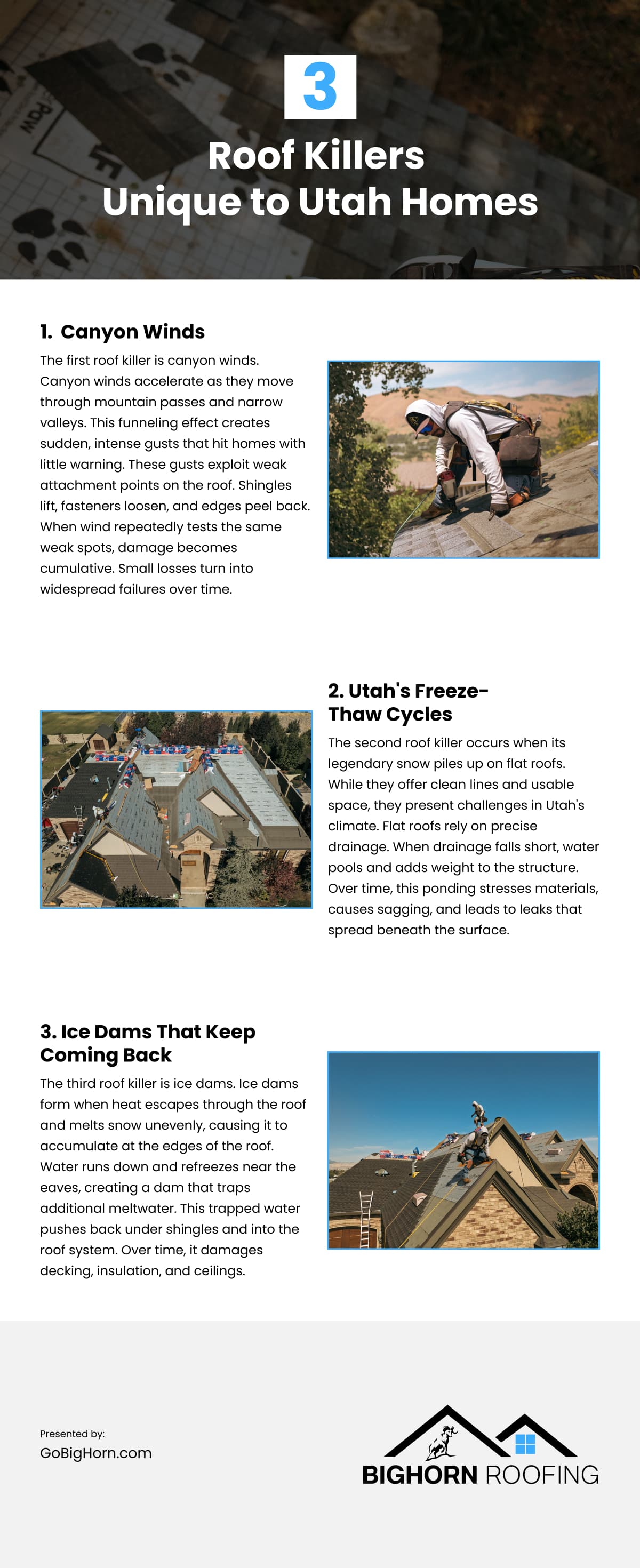
Roofs in Utah endure high elevation, intense UV exposure, and sharp seasonal swings that quickly wear down standard materials. These conditions shorten roof lifespans and increase the risk of leaks. This infographic highlights three major threats to Utah roofs.