Most homeowners think about storm damage, ice dams, or heavy snow when they imagine roof problems. But one of the biggest threats to your roof doesn’t come with bad weather at all. It shows up when the sun shines all day, slowly wearing your roof down over time.
Ultraviolet (UV) rays degrade your roofing materials, and by the time you can actually see the damage from the ground, much of the wear has already occurred beneath the surface.
Utah often has UV warnings at “very high” and “extreme” because of the high altitude, high sun visibility, and sun reflection from snow. Knowing which areas of your home are more vulnerable to this silent threat means you can catch problems early and keep your home protected.
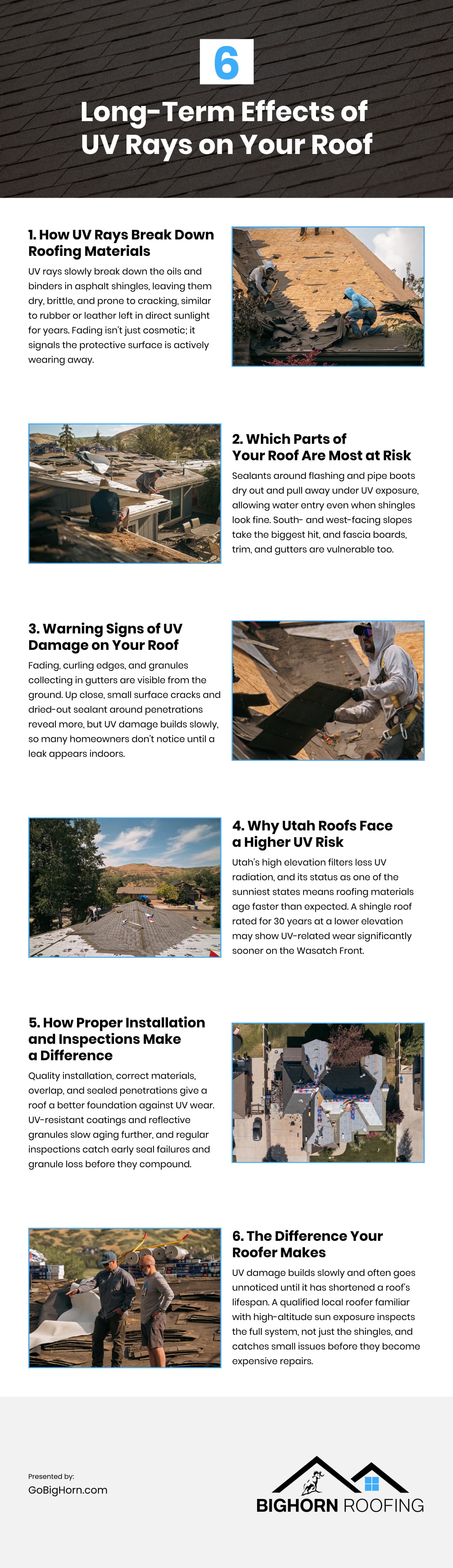
How UV Rays Break Down Roofing Materials
Ultraviolet radiation is the component of sunlight that causes sunburn by damaging the skin. But it also affects roofing materials over time. An asphalt shingle installation, the most common type of roof on homes across the Wasatch Front, contains oils and binders that help it remain flexible and durable.
As they’re exposed to UV rays year after year, those oils slowly break down, leaving the shingles dry, stiff, and much more likely to crack.
It’s a similar process to what happens when rubber or leather is left in direct sunlight for years. It starts flexible and strong, but constant sun exposure gradually breaks down the compounds that keep it that way. Over time, the material becomes brittle and less effective at doing its job.
The fading you see on an older roof is part of that same process. UV rays slowly bleach the pigments in the shingles. The color change may seem like a cosmetic issue, but it’s actually a sign that the protective surface is wearing away. Faded shingles haven’t just lost their original appearance; they’ve also lost some of the protection that helps slow further deterioration.
Which Parts of Your Roof Are Most at Risk
UV damage doesn’t just affect the shingles you can see from the street. It gradually affects several parts of your roofing system simultaneously, including areas homeowners rarely think about.
Sealants around flashing, pipe boots, skylights, and other roof penetrations are particularly vulnerable. When they’re first installed, these materials are flexible and create a tight seal. Over time, constant UV exposure causes them to dry out, harden, shrink, and pull away from the surfaces they’re protecting. Once that happens, water can enter the roof system even if the shingles above still look perfectly fine.
The underlayment beneath your shingles can also be affected. It serves as a second layer of protection if moisture gets past the shingles, but it can begin to break down in areas where the shingles have become thin, cracked, or worn. As the underlayment weakens, your roof loses another important line of defense against water intrusion.
South-facing and west-facing sections of your roof usually take the biggest hit because they spend more time in direct sunlight. Those areas tend to show signs of UV wear sooner than north-facing slopes, which is why they deserve extra attention during a roof inspection.
Painted or coated surfaces like fascia boards, trim, and gutters aren’t immune either. Years of sun exposure gradually wear down their protective finishes, which can lead to peeling paint, wood rot in wooden components, and less effective water protection along the edge of your roof.
Warning Signs of UV Damage on Your Roof
Some signs of UV damage are easy to spot from the ground, while others require a closer look from a trained roofing professional.
From the street, you might notice fading or uneven color on your shingles, edges that are starting to curl, or granules collecting in your gutters after a rainstorm.
Granule loss is one of the clearest signs that your shingles have years of UV damage. Those granules protect the asphalt underneath, and once they begin to wear away, the shingles break down much faster and become more vulnerable to heat and moisture.
An up close inspection often reveals even more. Shingles on the sunniest parts of the roof may have small cracks across the surface. Sealant around flashing, vents, or other roof penetrations may have dried out, pulled away, or started to crumble. These problem areas usually aren’t visible from the ground, but they are easy to spot during a professional roof inspection.
The tricky part about UV damage is that it develops slowly. It builds up little by little. Without a major storm or obvious event to get your attention, many homeowners don’t realize there’s a problem until there is a leak or a water stain inside their house. By then, the damage has often been developing for years.
Why Utah Roofs Face a Higher UV Risk
At lower elevations, the atmosphere filters out some of the sun’s UV radiation before it reaches the ground. Utah’s Wasatch Front sits at a much higher elevation than many other locations, so there is less natural protection from UV rays. Homes in even higher-elevation areas, like Park City, experience even more intense sun exposure.
Adding to the problem is the fact that Utah is also one of the sunniest states in the country. With so many clear days each year and strong summer sun, roofing materials often age faster than homeowners expect.
A shingle roof that’s rated to last 30 years in a lower-elevation climate may show signs of UV-related wear much sooner under the combination of intense sunshine and higher elevation. That’s one of the reasons regular professional roof inspections are especially important in this climate.
How Proper Installation and Inspections Make a Difference
No roof is completely immune to UV damage, but the quality of the installation can make a difference in how long your roof lasts.
A properly installed roof starts with using the right materials in the right order, along with correct overlap, fastening, and coverage. Roofing systems built with quality underlayment, properly sealed roof penetrations, and materials designed for the local climate are much better equipped to handle years of UV exposure without wearing out too soon.
The type of shingles you choose also matters. Some are made with UV-resistant coatings and reflective granules that help reduce heat absorption and slow down the aging process.
Regular roof inspections are just as important because they help catch UV-related wear before it turns into a bigger problem. An experienced roofer can spot early seal failures around vents and flashing, patterns of granule loss, areas where the underlayment is becoming exposed, and small surface cracks that aren’t visible from the ground. Taking care of these issues early is almost always less expensive than dealing with major roof damage from UV exposure.
The Difference Your Roofer Makes
One of the biggest challenges with UV damage is how slowly it happens. Because it builds up over time, most homeowners don’t notice it until it has shortened their roof’s lifespan. That’s why regular inspections by a qualified residential roofer, especially one familiar with the effects of high-altitude sun exposure, can help identify small issues before they become larger, more expensive problems.
You should work with a local Utah roofing company that understands the demands the Wasatch Front climate places on roofing systems. Their inspections should examine the entire roof, not just the shingles, and identify signs of UV damage before it gets worse.
If repairs or a replacement are needed, many companies also offer financing options to help you address problems on a schedule that works for you.
Video
Infographic
UV radiation quietly degrades roofing materials over time, and in high-altitude, high-sun climates like Utah, that damage accelerates faster than most homeowners expect or notice until it is already costly. Discover long-term effects of UV rays on your roof in this infographic.